

 ZALO TINTA




News & Events
News & Events
Stainless Steel 201 vs 304 – Five Key Differences and How to Choose the Right Material
Stainless Steel 201 vs 304 – Five Key Differences and How to Choose the Right Material
Meta Title: Stainless Steel 201 vs 304: Five Key Differences & Complete Buying Guide
Meta Description: Compare Stainless Steel 201 vs 304 in terms of composition, corrosion resistance, durability, appearance, price, and applications. Learn which stainless steel grade is best for your project.
Stainless Steel 201 vs 304 – Five Key Differences and How to Choose the Right Material
Choosing between Stainless Steel 201 and Stainless Steel 304 is one of the most common decisions faced by manufacturers, contractors, architects, and homeowners. Although both materials offer attractive finishes and excellent mechanical strength, they differ significantly in corrosion resistance, chemical composition, durability, and long-term performance.
Selecting the right stainless steel grade helps reduce maintenance costs, improve product lifespan, and ensure your project performs well in its intended environment. This comprehensive guide explains the five major differences between Stainless Steel 201 and 304 while providing practical recommendations for various applications.
Understanding Stainless Steel 201
Stainless Steel 201 is an economical austenitic stainless steel developed to reduce production costs by replacing part of the nickel content with manganese and nitrogen.
Its main characteristics include:
- Affordable pricing
- Good mechanical strength
- Attractive polished appearance
- Suitable for indoor applications
- Easy fabrication and welding
- Good formability
Because of its lower material cost, Stainless Steel 201 is widely used in furniture manufacturing, decorative products, household equipment, and commercial interior projects.
Understanding Stainless Steel 304
Stainless Steel 304 is the industry's most widely used stainless steel grade and is often considered the standard for premium corrosion resistance.
Its advantages include:
- Excellent corrosion resistance
- High chromium and nickel content
- Outstanding durability
- Hygienic and food-safe properties
- Superior weldability
- Long service life
- Excellent polishing performance
For projects requiring reliability in outdoor or humid environments, Stainless Steel 304 remains the preferred material worldwide.
Five Key Differences Between Stainless Steel 201 and 304
1. Chemical Composition
The primary distinction lies in their alloy composition.
Stainless Steel 304 contains approximately 18% chromium and 8% nickel, providing superior corrosion resistance and excellent structural stability.
Stainless Steel 201 contains less nickel and higher manganese content, making it more economical while sacrificing some corrosion resistance.
This difference directly influences durability, appearance, and long-term performance.
2. Corrosion Resistance
Corrosion resistance is often the deciding factor when choosing between these two materials.
Stainless Steel 304
Offers excellent protection against:
- Rain
- Humidity
- Food acids
- Cleaning chemicals
- Urban pollution
- Outdoor environments
Stainless Steel 201
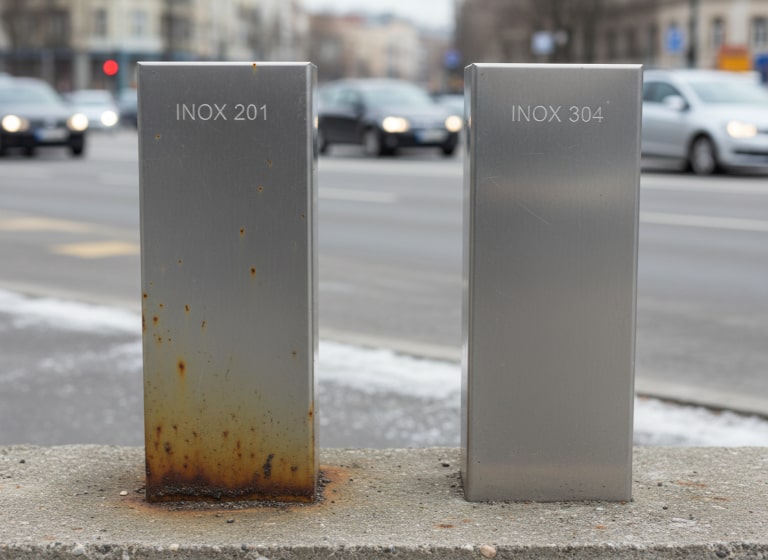
Performs well in dry indoor conditions but may develop discoloration or surface corrosion when exposed to:
- Coastal environments
- Saltwater
- Industrial chemicals
- High humidity
- Acidic substances
For outdoor architectural projects, Stainless Steel 304 is generally the safer investment.
3. Appearance and Surface Finish
At first glance, both grades appear almost identical.
Both materials can be manufactured with:
- Mirror polish
- Satin finish
- Hairline finish
- Brushed finish
- Decorative coatings
However, Stainless Steel 304 retains its bright finish longer because of its superior resistance to oxidation and staining.
This makes it ideal for premium architectural installations where long-term aesthetics are essential.
4. Durability and Service Life
Although both grades offer excellent mechanical strength, their long-term durability differs considerably.
Stainless Steel 201
Best suited for:
- Indoor decoration
- Furniture
- Dry environments
- Decorative components
- Commercial interiors
Stainless Steel 304
Recommended for:
- Outdoor structures
- Public infrastructure
- Food processing equipment
- Stainless steel railings
- Architectural facades
- Marine-adjacent locations
Its superior resistance to corrosion significantly extends product lifespan while reducing maintenance requirements.
5. Cost Comparison
Price is one of the biggest reasons buyers consider Stainless Steel 201.
Stainless Steel 201
Advantages:
- Lower production cost
- Budget-friendly
- Suitable for large-volume projects
- Good value for indoor applications
Stainless Steel 304
Advantages:
- Higher initial investment
- Lower maintenance costs
- Longer service life
- Better long-term value
- Reduced replacement expenses
While Stainless Steel 304 costs more upfront, its durability often makes it the more economical choice over the product's lifetime.
Application Comparison
When to Choose Stainless Steel 201
Stainless Steel 201 is ideal for:
- Indoor furniture
- Decorative panels
- Display fixtures
- Retail interiors
- Household products
- Office furniture
- Indoor handrails
- Decorative stainless steel balls
It delivers excellent aesthetics while keeping project costs under control.
When to Choose Stainless Steel 304
Stainless Steel 304 is recommended for:
- Exterior architecture
- Balcony railings
- Building facades
- Food processing equipment
- Hotel projects
- Shopping centers
- Public infrastructure
- Decorative stainless steel spheres
- Commercial kitchens
- Industrial fabrication
Its superior corrosion resistance makes it suitable for demanding environments where durability is critical.
Which Material Offers Better Value?
The answer depends on the intended application.
If your project is located indoors with minimal exposure to moisture or corrosive substances, Stainless Steel 201 provides an economical and visually appealing solution.
For outdoor installations, humid climates, coastal regions, or projects requiring long-term reliability, Stainless Steel 304 offers significantly better value despite its higher purchase price.
Considering lifecycle costs—including maintenance, repairs, and replacement—304 stainless steel often proves to be the more cost-effective investment.
Tips for Choosing the Right Stainless Steel
Before purchasing stainless steel products, consider the following factors:
- Installation environment
- Exposure to moisture or chemicals
- Expected service life
- Maintenance requirements
- Project budget
- Aesthetic expectations
- Structural requirements
Working with an experienced manufacturer ensures you receive the correct material grade, certified quality, and professional fabrication tailored to your specific application.
Other news ...
STAILESS STEEL PRODUCTS
Featured Products



Hot News
Does a Stainless Steel Playground Slide Get Hot – Effective Solutions for Outdoor Installations
stainless steel processing on demand low price in Ho Chi Minh City

Industrial stainless steel processing according to details design cheap prices

Outsourcing stainless steel household cheap price in Vung Tau, Dong Nai, Binh Duong